
Blog Archives
You Should’ve Said No – 2012
You shouldn’t smoke this other blunt, and you know it too. But your drunken ass just can’t say no to Sonia, licking the Dutchie with her raspberry mouth, because you don’t see a blunt at all, but imagine something else between her lips, and instead of saying no, you hand her a lighter.
Sonia is a professional at rolling pencil-straight blunts. You imaging she must be professional at other things too, because that’s how your perverse mind thinks. It doesn’t matter that she can’t cook rice and beans like Abuelita does, or that she leaves dirty panties in the tub, or thinks Uruguay is an exotic Malaysian dish. Read the rest of this entry
My Love for you is Burnin (2010)

My love for you is burnin
Like Paris is burnin
New York burnin
New hope burnin
Flowers are burnin
Life is burnin Read the rest of this entry
Who is an Artist? (2013)
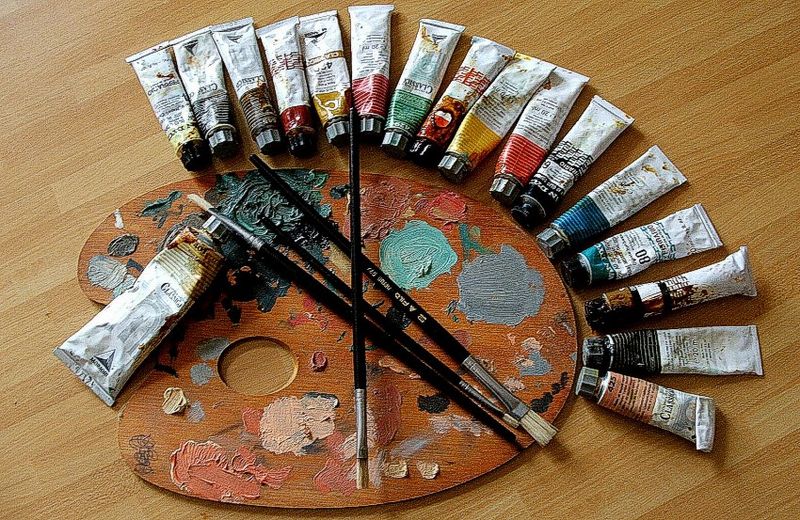
you are, who sees beauty in a leper’s face
when no one else will even glance
you who in moments of shame, still smile
because “life ain’t that serious,” you say
who at night sits in silence to hear the moon’s whisper,
because inspiration is born in those words Read the rest of this entry
Sexualizing Clogged Pipes? Really?
Sex Sells. We all know that. Marketers know that. Everyday, we’re bombarded by sexual undertones and overt sexual imagery on TV commercials, billboards, print and online ads. This is not new. As a society, we are addicted to sex and sexuality. We consume porn like we consume food. Even with a plethora of free Internet porn, the industry is still a thriving multibillion-dollar industry. Why are we so obsessed with sex? Read the rest of this entry
My Fertile Sperm (2012)
It’s a pearl future we perceive
An ideal life we weave and weave
Like spiders cast their fertile webs
And wait in prey their daily bread
like rivers thrusting north and south
I gush my gusher in your mouth
You take it in just like a champ
and down your throat my kids make camp Read the rest of this entry
Djembe
Bill has been on the block since Vietnam, and has seen it go from White to Brown. He grew up across town, in a one-bedroom with his mother, when Bergenline was still Italian. He saw the first wave of Cubans come in the late 60’s, and felt right away this meant trouble. He watched as the Marielitas turned the town Brown in the 80’s, while the Italian exodus moved west to the burbs along route 3, where it was still White. But Bill refused to leave. He was a Veteran and the only thing he knew how to do was to stay and fight for what was his. At least that’s what he likes to tell people. Read the rest of this entry
Walt Whitman: Slavery, Paradox and Future Poetics
*This essay was originally written for a Graduate course on American Poetry in Fall 2010.
Walt Whitman’s personal inconsistencies regarding his position on slavery have been the subject of much scholarly criticism and debate. It has been well documented that Walter Whitman, the journalist, political activist and public figure, held dramatically opposing views on slavery and race concerns than did Walt Whitman, the poet, bard of democracy and champion of equality. The latter Whitman used his poetry–particularly the many editions of Leaves of Grass–to indulge in a sense of admiration, identification, sympathy and respect for the “hounded slave,” while the former was an active member of several political parties, composed ideological editorials in a few political publications and was for some time, an ardent opponent of the abolitionist movement. Given his blatant paradoxical ideologies and his transparently polar vision on slavery, how is a twenty-first century reader supposed to reconcile these contradictions? Read the rest of this entry
 Wilson Santos